Across the board, property insurance is getting hit hard — and the habitational insurance market is not immune. In the face of shrinking capacity and higher premiums, it’s more important than ever for habitational property owners to rely on quality carriers with time-tested reputations.
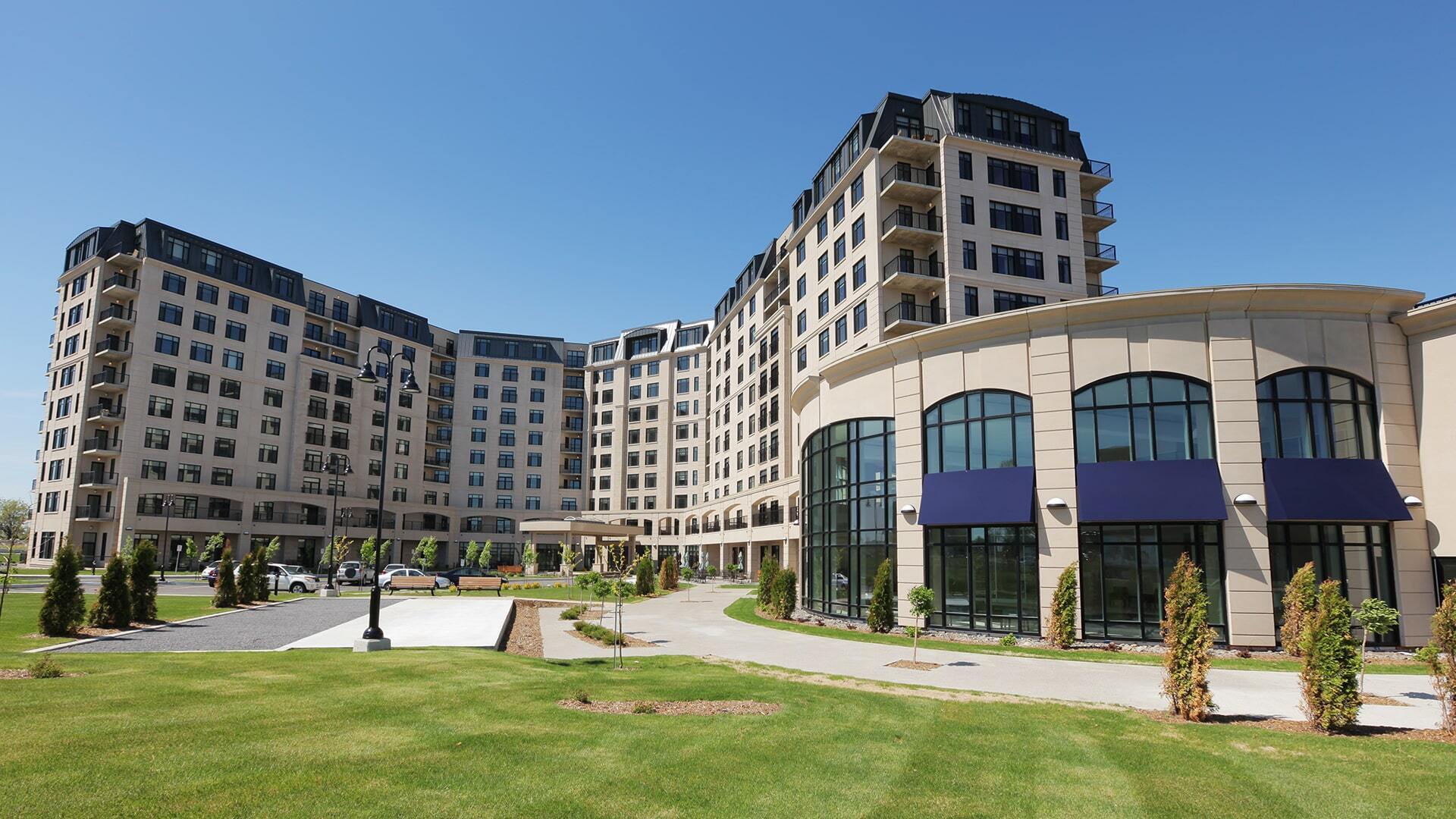
Commercial habitational insurance provides coverage for commercial property owners who rent or lease out their properties to residential tenants. This includes apartment buildings, townhomes, and condos — as well as other multi-unit residential buildings like assisted living facilities, nursing homes, student housing buildings, immigrant housing, and homeless shelters.
Although policies can vary greatly, habitational coverage is designed to protect property owners from a variety of risks, like property damage, liability claims, loss of rental income, and tenant displacement.
6 Things Your Clients’ Habitational Carrier Must Have
When considering coverage options for your commercial habitational clients, it’s important to carefully evaluate the carrier.
According to Thomas Lynch, Senior Vice President of Jencap’s Specialty Insurance Services Division, “Habitational is a tough class of business, and there are only a few carriers who can sustain such losses. It’s a difficult space for new carriers to enter, and they usually get buried pretty quickly.”
With that in mind, here are some of the markers of a quality carrier:
- Industry expertise and specialization. Habitational coverage is not a one-size-fits-all solution. Even rental properties that initially appear similar can have very different risk profiles and coverage needs. A one-hundred-unit senior facility in a rural area, for instance, is very different from a one-hundred-unit apartment complex in the middle of New York City. A quality carrier will know the specific needs of each class and the subtle nuances that impact accurate underwriting and claims management. Lynch explains, “They have a solid industry reputation, because they’ve seen it all and know how to defend claims.”
- Longevity and profitability. When it comes to habitational insurance, the amount of time a carrier has been writing the coverage is typically an indicator of a quality carrier. This is a challenging business space to write for, and it takes a strong, knowledgeable carrier who can ride out tough market conditions while still remaining profitable and able to consistently provide coverage and pay out claims — which can be quite significant — for their insureds. “A carrier who has been underwriting in this space for 15 or 20 years has stood the test of time,” says Lynch. “They’re still here for a reason.”
- In-house claims team. A carrier that retains an internal claims team, rather than outsourcing to a third party, is committed to developing and cultivating internal expertise that benefits the entire business — and, ultimately, the insured. An in-house team typically collaborates closely with the carrier’s underwriters, sharing resources, experience, and lessons learned. This shared institutional knowledge not only enables better, more accurate underwriting but also equips a carrier to create better risk control resources to help insureds avoid costly claims before they even occur.
In the event of a claim, the insured is also likely to have a better and more seamless customer experience working with an in-house claims team because their claims adjuster is personally invested in the carrier as a company, rather than operating as an intermediary who may also work with a range of other carriers.
- AM Best rating of A or higher. This may seem obvious, but with something as complex as habitational insurance, it’s critical to seek out carriers with high credit ratings. These ratings refer to the financial health and strength of an insurance company, and take into consideration things like the carrier’s balance sheet, operating performance, and business profile. Put simply, the rating gives the insured confidence that their carrier is able to meet its financial obligations to policyholders. “When you’re dealing with a class of business like habitational,” Lynch explains, “the claims can be very high. An insured should confidently pay their premiums to a carrier that is financially stable and able to payout a claim if the unthinkable were to happen.”
- Comprehensive coverage. Unfortunately, some habitational carriers attempt to use price as a competitive differentiator, but it comes at the cost of adequate coverage. According to Lynch, “A lot of people are trying to play in this space, but they’re stripping down the coverages as a way to compete. That’s a very dangerous game because these coverages exist for a reason. When you partner with a good carrier, your goal is to find a happy middle-ground where pricing and coverage are both adequate for the client’s needs.” Given how varied and costly risks are in the habitational space, an insured needs the security of comprehensive coverage without worrying about coverage gaps.
- Flexible and creative coverage solutions. Although comprehensive, adequate coverage is vital, a quality carrier should still be willing to customize solutions to meet an insured’s specific needs and budget. This is particularly important because of how unique habitational classes of business are, depending on where they’re located and the purpose they serve. In negotiations, there should always be room for conversations about things like making adjustments to deductible amounts, applying sublimits to certain risks, or building in a self-insured retention.
As a leading wholesale broker, Jencap has exceptional relationships with top habitational carriers nationwide, which Lynch states is key to securing coverage in a difficult market.
“We’ve been nurturing our reputation with these carriers for years. When carriers get bogged down in an extremely saturated market — like the one we’re in right now — there are more submissions coming in than underwriters can get to. They pay attention when it comes from our team due to the trust and goodwill that has been established.”
Contact Jencap to learn more and get a quote today.

The Jencap Casualty Insurance Team
Jencap’s casualty experts have custom solutions no matter how complex, or straightforward, your risk. Our dedicated team has niche expertise in construction, product recall, habitational, umbrella and excess, and more! With our streamlined process, you'll direct your energy where it's needed most and leave the rest to us.