
Businesses across all industries should be operating with adequate liability insurance coverage. This insurance helps these businesses pay for damages, which is money that is paid out to anyone who is injured in some way and for the expenses associated with the claim. But this type of coverage can be limited, only covering clients up to policy limits. So, what happens if a judgement exceeds those limits? This is where considering excess or umbrella insurance comes into play. Umbrella and excess insurance policies are designed to be additional layers of protection above primary liability insurance policies, such as a commercial general liability policy. But while these two added coverage options are similar, they do come with some significant differences.
A General Look at Umbrella and Excess
Both of these policies are intended to offer additional coverage above the limits of the underlying coverage; the main difference is what limits are applied to clients. Presently, the market for both types of insurance is in a bit of a limbo as prices of umbrella insurance and excess insurance are set to see dramatic increases over the next few quarters due to COVID-19.
Umbrella policies provide increased limits over underlying insurance and they can provide coverage if there is no coverage in a liability policy that’s already in place. Excess policies only provide coverage when the underlying policy responds to a particular situation, like major injuries or death.
Umbrella Policy
A commercial umbrella liability policy is designed to provide different types of insurance coverage. One type of coverage is the underlying insurance coverage, which means any policies of insurance listed in the Declarations under the Schedule of underlying insurance coverage. It provides coverage for liability exposures for which there is no underlying insurance in place.
Umbrella policies also offer higher liability limits and broaden coverage for things that an underlying policy might not cover. For instance, an umbrella policy could extend coverage to include worldwide coverage. When added coverage is provided by this type of policy, it is usually subject to the client’s retained limit.
Excess Liability
An excess liability policy provides coverage above the limits of the underlying coverage. It doesn’t offer broader protection than that provided by the underlying policy. The excess liability coverage may be more restrictive in some scenarios compared to the underlying coverage.
Most umbrella and excess liability policies are not written into standard liability insurance policies, so it is important that clients read through their policies to see what is actually covered. You can read more Jencap news here.
The Jencap Professional Lines Insurance Team
Whether it’s professional, management, or cyber liability, Jencap’s experienced brokers stay on top of industry trends and one step ahead of the competition, so they can offer the best guidance to you and your clients. Armed with decades of experience, Jencap’s dedicated professional lines team works tirelessly to navigate difficult risk placements, strict security control requirements, ever-changing market capacity, and unpredictable rate fluctuations.
Explore Further
Building Confidence: Understanding Construction Managers Insurance

Nov 7, 2024
Professional Liability Insurance: Notable Exclusions

Aug 9, 2023
What’s the Difference Between Product Liability and General Liability?

Mar 22, 2023
Delta General Agency Corporation Rebrands to Jencap Insurance Services Inc.

Oct 4, 2022
The Difference Between Excess and Umbrella Insurance
May 15, 2020
Trends & White Papers
Agent’s Guide to Professional Liability Gaps (and How to Close Them)
Professional risks are evolving faster than most coverage forms can keep up. The difference between protection and exposure often comes down to the fine print. Do you know how to read between the lines? Jencap’s professional lines specialists do, helping you see what others might miss.
The New Era of Workers' Compensation: Powered by Data, Driven by Outcomes
Cracking the CAT Modeling Code
Is Going Green Good?
Chronicles of Casualty
Navigating the New Frontiers of Professional Lines Insurance
Preparing for The Future of Cannabis Insurance
How Climate Change is Shifting the Insurance Industry
Garage Gurus: Garage Coverage Explained
Riding The Waves of Change Insurance Industry Outlook
Podcasts
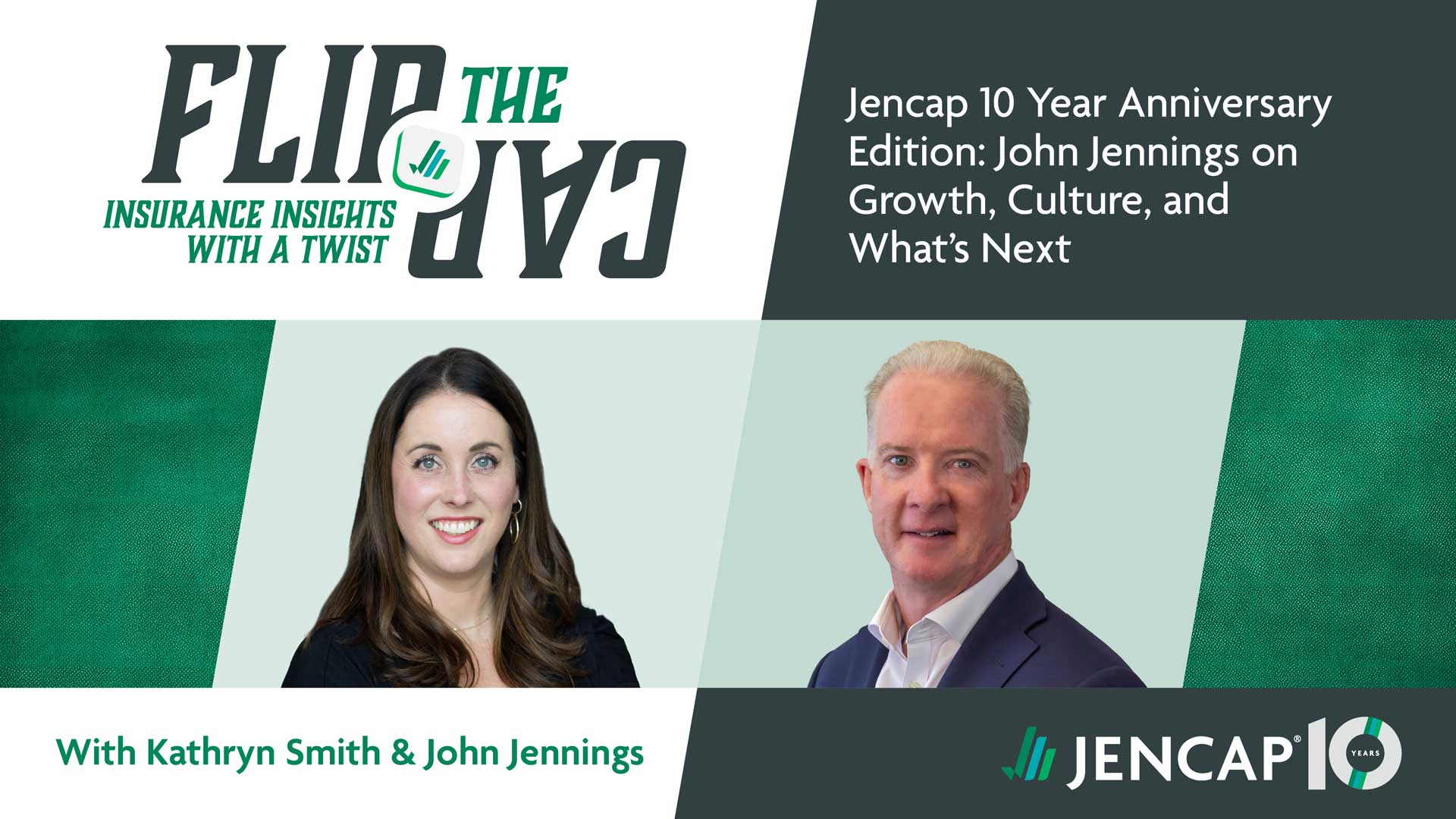
Flip the Cap Episode 22: Jencap 10 Year Anniversary Edition: John Jennings on Growth, Culture, and What’s Next

Apr 7, 2026
Flip the Cap Episode 21: Global E&S Trends, Emerging Risks and 2026 Predictions

Nov 12, 2025
Flip the Cap Episode 20: The Energy Pivot: What’s Here to Stay and What’s On the Way

Aug 27, 2025
Flip the Cap Episode 19: Cannabis Insurance Insights: Regulatory Shifts, Coverage Gaps & Expert Strategies

Jul 31, 2025
Flip the Cap Episode 18: The Big Build: Inside Construction Wrap-Up Programs
Apr 24, 2025
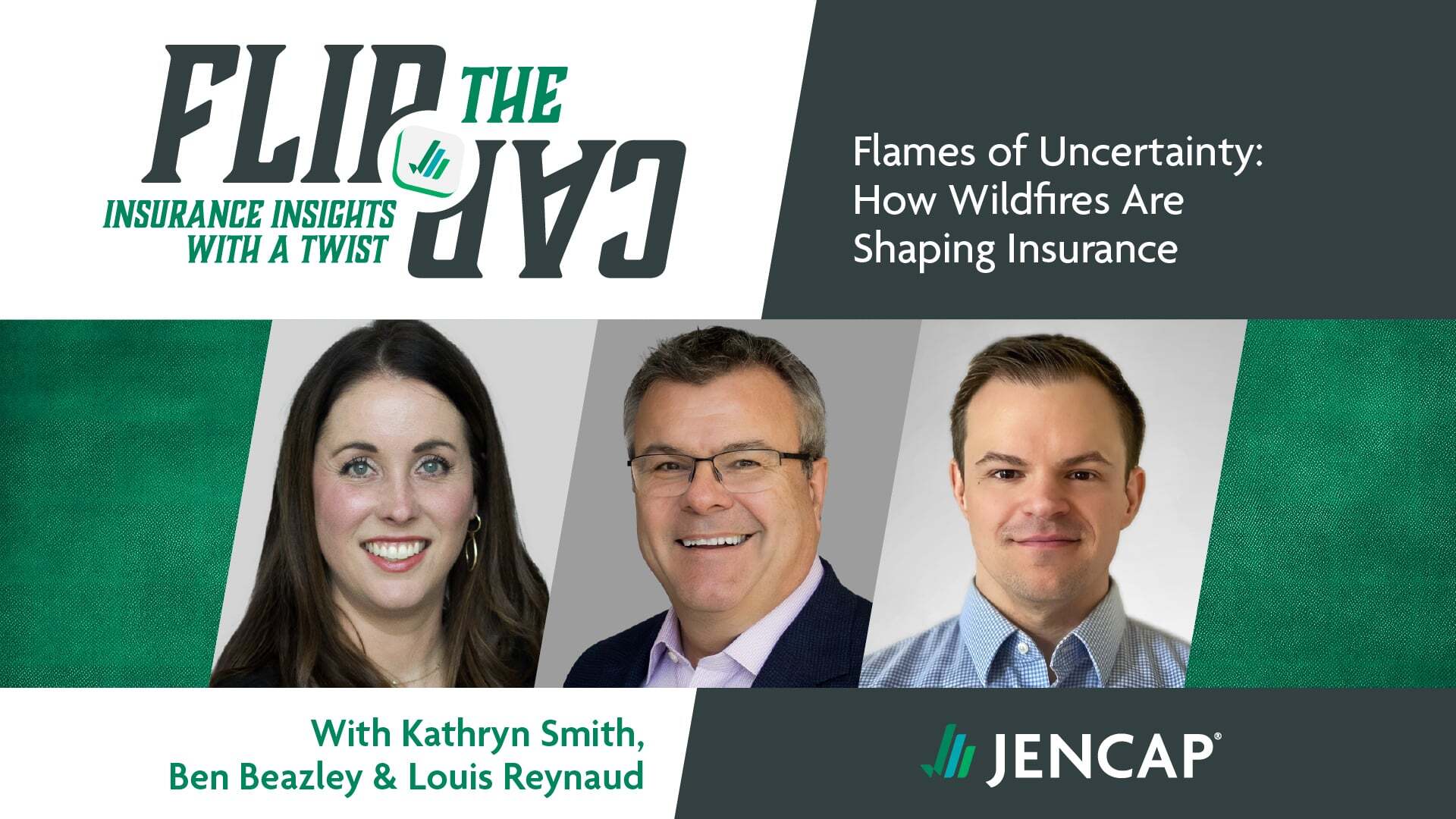
Flip the Cap Episode 17: Flames of Uncertainty: How Wildfires Are Shaping Insurance
Mar 20, 2025
Recent Posts
The Technology Signals Reshaping Transportation Risk in 2026

Apr 25, 2026
Cannabis Insurance in Newly Legalized States

Apr 14, 2026
Renewable Energy Risk Trends for Insurance Agents
Apr 9, 2026
Flip the Cap Episode 22: Jencap 10 Year Anniversary Edition: John Jennings on Growth, Culture, and What’s Next

Apr 7, 2026
Common Gaps in Watercraft & Yacht Insurance Coverage

Mar 26, 2026
PFAS Disposal Rules Shift Again
Mar 19, 2026