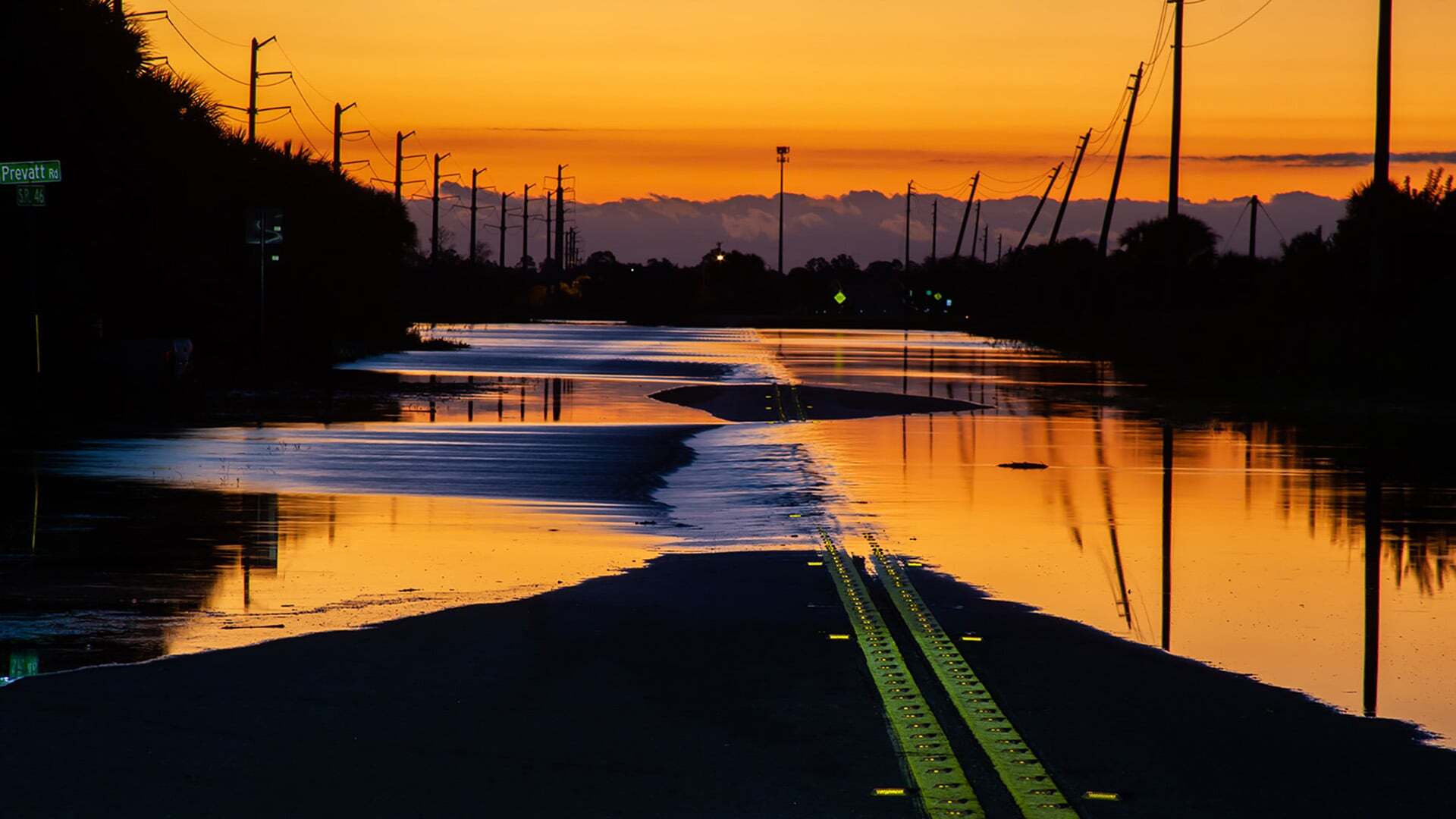
Hurricane Helene, one of the most powerful in recent years, caused unprecedented inland flooding and landslides, turning elevated areas like Asheville, NC, into disaster zones. With record-breaking rainfall, the French Broad River in Asheville crested 10 feet higher than its previous peak, marking September 2024 as the wettest month on record for several western sites. Hundreds of thousands are still without power, and the death toll continues to rise, making Helene the second deadliest to Hurricane Katrina. The total cost for damages could surpass $30 billion.
Hurricane Helene’s destructive path through the Southeastern U.S., particularly in Western North Carolina, has raised serious questions about the reliability of catastrophe (CAT) models. While CAT models typically focus on coastal damage, Helene’s inland destruction exposes potential shortcomings in their predictive capabilities, highlighting the need for expert human analysis to supplement these models. The storm’s unexpected impacts have placed renewed urgency on balancing technological tools with the judgment of skilled underwriters to protect vulnerable communities — who may not even realize they are, in fact, vulnerable.
Understanding Catastrophe Modeling
Catastrophe modeling is the cornerstone of the insurance industry’s ability to prepare for natural disasters. CAT models examine historical data, climate patterns, and other relevant factors to project potential losses from catastrophes like hurricanes, wildfires, floods, and earthquakes. Insurers use them to monitor the deployment of limits in relation to their capital capabilities, inclusive of reinsurance treaties. They also calculate premiums to help determine they are charging enough for the expected possessions from any given catastrophe in a certain geography, making them a vital tool for the industry. Yet, despite their importance, CAT models have inherent limitations. Most models rely heavily on backward-looking data, assessing risks based on past events. They were never designed to be precise predictors but to help insurers approximate risk. The challenge arises when unprecedented events — such as Helene’s inland flooding and wind effects — fall outside the patterns these models anticipate.
When CAT Models Miss the Mark
Though it made landfall in Florida, Helene’s impact wasn’t limited to coastal damage. As it moved inland, places like Western North Carolina — known as a “climate haven” — suffered devastating damage. Many homeowners in these regions didn’t have flood insurance, assuming their elevation would protect them. Because an average homeowner policy in the U.S. typically does not cover flooding, the number of people who won’t see any payouts from insurance, even if they have policies they thought were comprehensive, will be staggering. The disconnect between CAT models and the reality of Helene’s destruction raises significant concerns, as many models fail when the environment shifts in ways that historical data cannot account for. In the case of Helene, traditional models focused on coastal impacts, underestimating the potential for severe inland flooding.
Convective Storms Continue to be the Biggest Concern For Carriers
Despite the evident increase in the frequency and severity of named storms, these devastating storms still possess a level of predictability due to their historical patterns. Named storms like hurricanes have been studied extensively, giving insurers and modelers a clearer understanding of their behavior. However, convective storms, which form due to the rising of warm, moist air into cooler layers of the atmosphere, are far more unpredictable and have become a growing concern for carriers.
Convective storms can generate highly destructive weather, including tornadoes and severe hailstorms, and often strike without the warning or predictable patterns seen in named storms. As a result, CAT models struggle to account for the randomness and intensity of these events, making risk assessment increasingly difficult. At the recent WSIA conference, Ben Beazley, EVP of National Accounts Property at Jencap, noted, “I heard repeatedly from property carriers that convective storms are their biggest concern.” The unpredictability of these events forces carriers to reconsider their models, questioning whether they can accurately account for the risks posed by tornadoes, hailstorms, and unexpected behavior from named storms.
The Undeniable Importance of Underwriters
As CAT models face scrutiny, it only reinforces that human expertise is essential to supplement the data. Technology and AI can only take us so far and models alone can’t account for every variable. Underwriters interpret these models, providing context and making better-informed recommendations. Hurricane Helene is a perfect example of how underwriters make a difference. When a model predicts risk, it’s the underwriter’s job to analyze that prediction, weigh in on the unique aspects of each situation, and adjust policies accordingly. Underwriters are the bridge between data and reality. They take CAT models’ results and apply their expertise to mitigate the blind spots that models may overlook, such as Helene’s 500-mile path of destruction.
So, What Next?
Hurricane Helene is a stark reminder for the insurance industry that while CAT models are essential, they are not infallible. The unexpected devastation inland proved that models alone cannot foresee every risk. That’s where underwriters step in, providing the insight, analysis, and expertise to make more accurate catastrophe insurance recommendations and ultimately protect policyholders. At Jencap, we understand the complexities of CAT risks and the importance of balancing advanced modeling with expert judgment. We also access unique capacity providers to offer coverage solutions that fall outside the appetite of many ‘high street’ insurers. Our brokers connect agents with carrier partners that leverage the best of both worlds — technology and human insight — to help agents navigate the unpredictable nature of natural disasters. By combining data with experience, we offer tailored insurance solutions that provide greater peace of mind in an ever-changing world. Contact us today.

The Jencap Property Insurance Team
Jencap’s property teams have extensive experience with all manner of occupancies and have unparalleled specialization in designing, implementing, and servicing complex
property insurance and reinsurance programs. Our team welcomes the challenges presented by CAT-exposed properties, vacant buildings, offensive claims history, new ventures, and everything in between!