

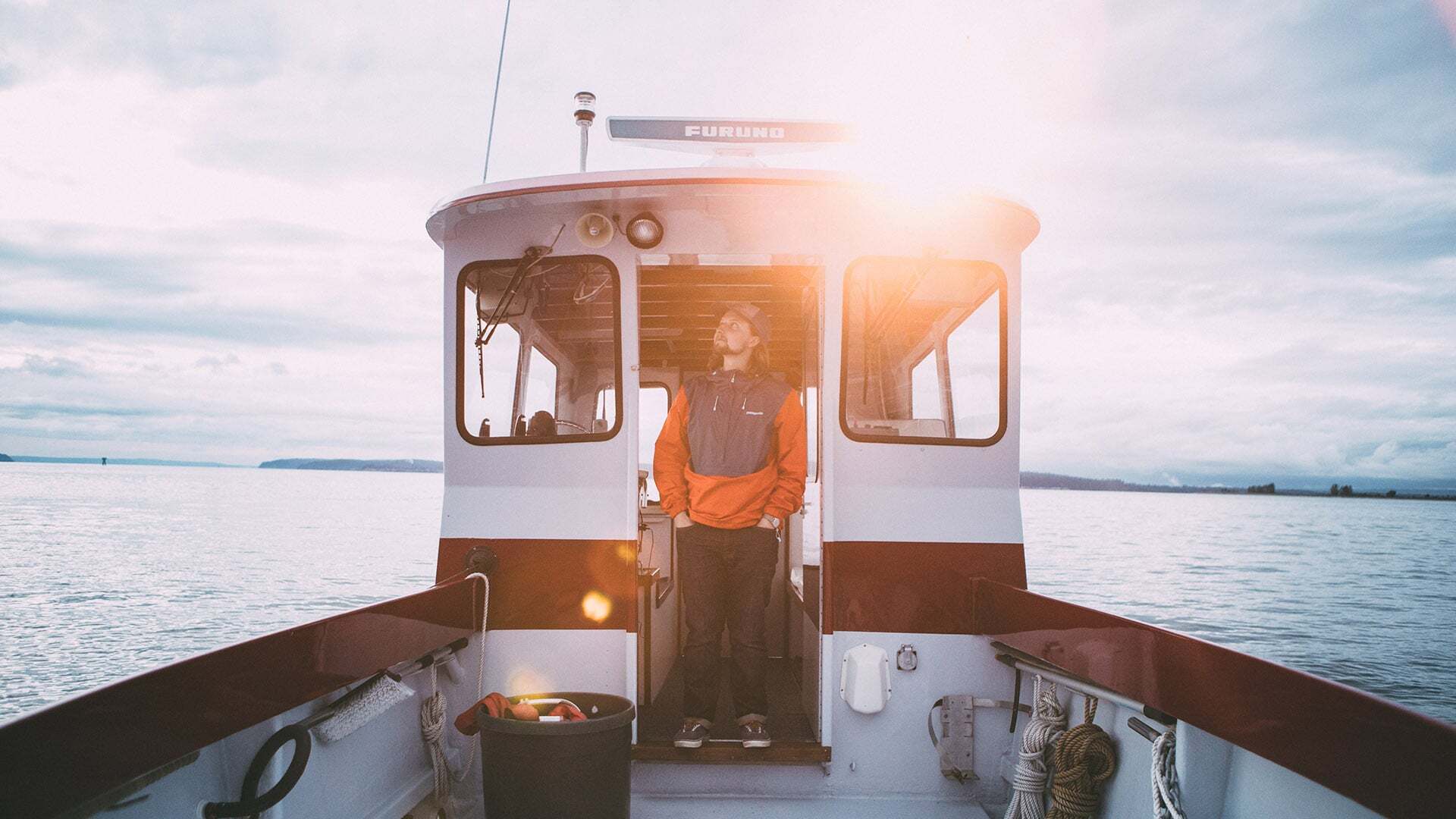
There are a great number of commercial industries that operate their business on or near water.
Unfortunately, there are also too many commercial clients that have a standard Workers’ Compensation policy and THINK they have USL&H coverage (or worse, don’t even know that they need it). Even some of the best insurance underwriters miss it!
Before I dive into the importance of having USL&H coverage, let’s define a few important terms. The United States Longshore and Harbor Workers Compensation Act (USL&H) is a federal coverage that applies to maritime employees who work on or over navigable waters – in or adjacent to the United States (sailors, seamen, masters and crews of any ship/vessel/watercraft are exempt).
Navigable water is defined as water that provides a channel for commerce and transportation of people and goods. Jurisdiction over navigable waters belongs to the federal government rather than states or municipalities, which is why USL&H is very different than Workers’ Compensation and not an automatic coverage. There are only a handful carriers that can write USL&H coverage as an endorsement to the Workers’ Compensation policy, since it must be approved by the federal government.
Workers’ Comp carriers that offer USL&H coverage as an endorsement will apply an additional percentage charge on top of the class code’s state rate. It’s often twice the price since there are no set benefit schedules. Every single claim goes to court with USL&H which is very expensive.
The “situs and status” test is your key to determining what jobs or tasks are eligible to receive USL&H coverage in the event of a claim. Where is the work being done (is it on or near navigable waters) and what is the employee doing – you must qualify for both.
If your client who builds docks files a claim on their Workers’ Comp policy and it is deemed the claim should have been covered under USL&H and there isn’t coverage, it does NOT fall to the standard Workers’ Comp policy – there is no coverage at all. What’s worse is that because there are no standard scheduled benefits with USL&H, the claims are much more expensive.
Here are some common jobs that require USL&H coverage: dock builders, marine contractors, boat builders, bridge builders, freight handlers, vendors delivering products to cruise ships – just to name a few.
Even if your client is working in/on two feet of navigable water (or less), they legally must have USL&H coverage. Failure to have coverage is against the law and carries serious fines. If that isn’t enough to scare you, it poses a huge Errors & Omissions exposure for insurance agents. Your client is counting on you to advise them on all coverages they need; but when your cabinet contractor failed to mention they occasionally go on boats to fix their cabinets, you are both exposed.
Jencap is standing by to help. When we say we are Workers’ Compensation experts, we mean it. Our Senior Broker, Kristi Tinker, has her Certified Marine Insurance Professional (CMIP) designation. There are only 220 individuals in the United States with this prestigious designation (out of $1.1M+ insurance professionals in the United States). The second water comes up in conversation with your commercial clients, give Jencap a call. We know the questions to ask and the coverage that is needed to properly protect you and your client.
The Jencap Workers' Compensation Insurance Team
Workers’ compensation is not a generalist’s game. Jencap’s dedicated division of industry-leading workers’ compensation experts understands every facet of this complex coverage line — from multi-state operations and high-hazard risks to United States Longshore and Harbor Workers Compensation Act (USL&H), and everything in between. No matter your clients’ industry, state, experience modification factor, premium size, or class code, the Jencap workers' compensation team has you covered.
Trends & White Papers
Agent’s Guide to Professional Liability Gaps (and How to Close Them)
Professional risks are evolving faster than most coverage forms can keep up. The difference between protection and exposure often comes down to the fine print. Do you know how to read between the lines? Jencap’s professional lines specialists do, helping you see what others might miss.
The New Era of Workers' Compensation: Powered by Data, Driven by Outcomes
Cracking the CAT Modeling Code
Is Going Green Good?
Chronicles of Casualty
Navigating the New Frontiers of Professional Lines Insurance
Preparing for The Future of Cannabis Insurance
How Climate Change is Shifting the Insurance Industry
Garage Gurus: Garage Coverage Explained
Riding The Waves of Change Insurance Industry Outlook
Podcasts
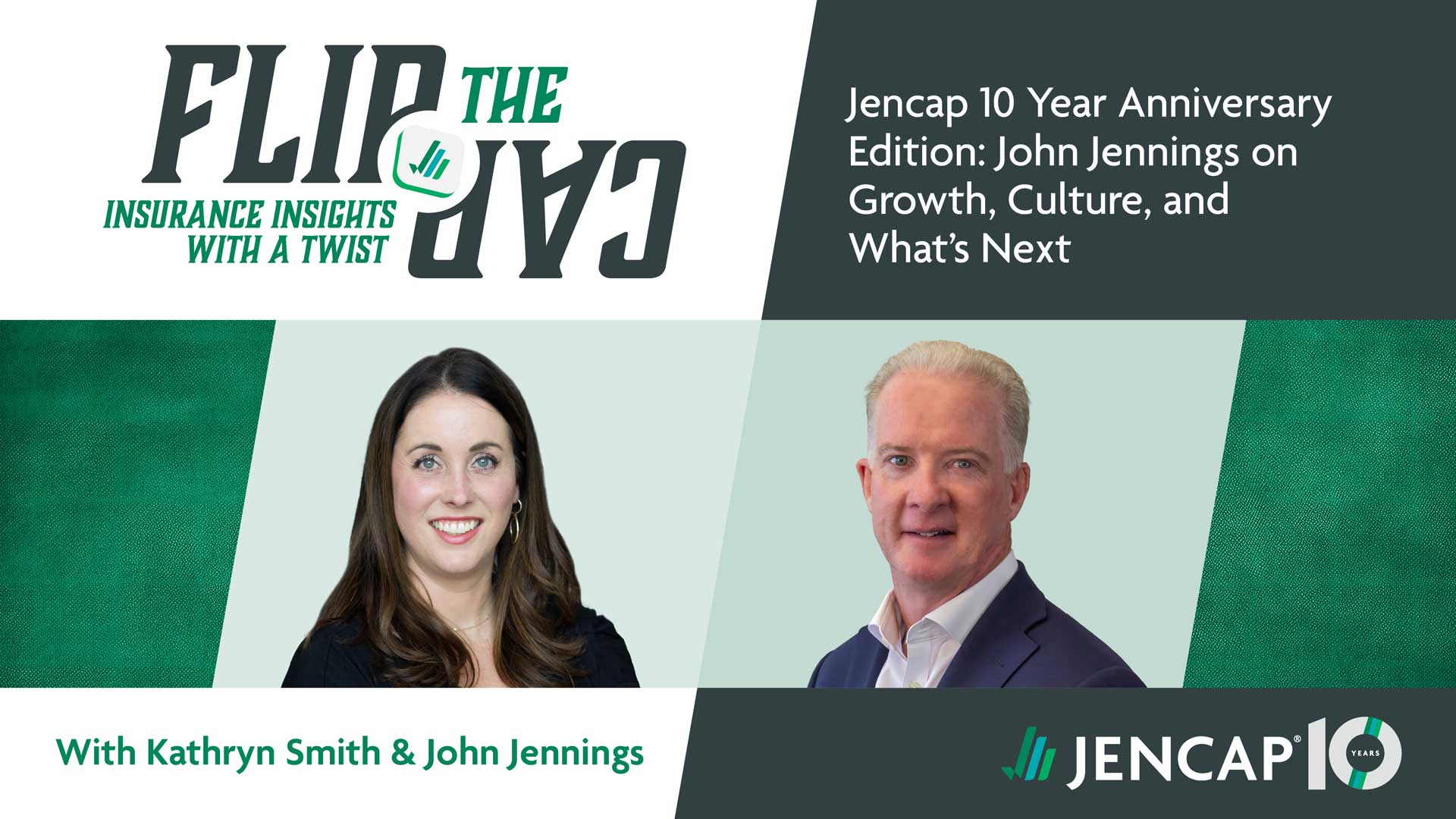
Flip the Cap Episode 22: Jencap 10 Year Anniversary Edition: John Jennings on Growth, Culture, and What’s Next

Apr 7, 2026
Flip the Cap Episode 21: Global E&S Trends, Emerging Risks and 2026 Predictions
Nov 12, 2025
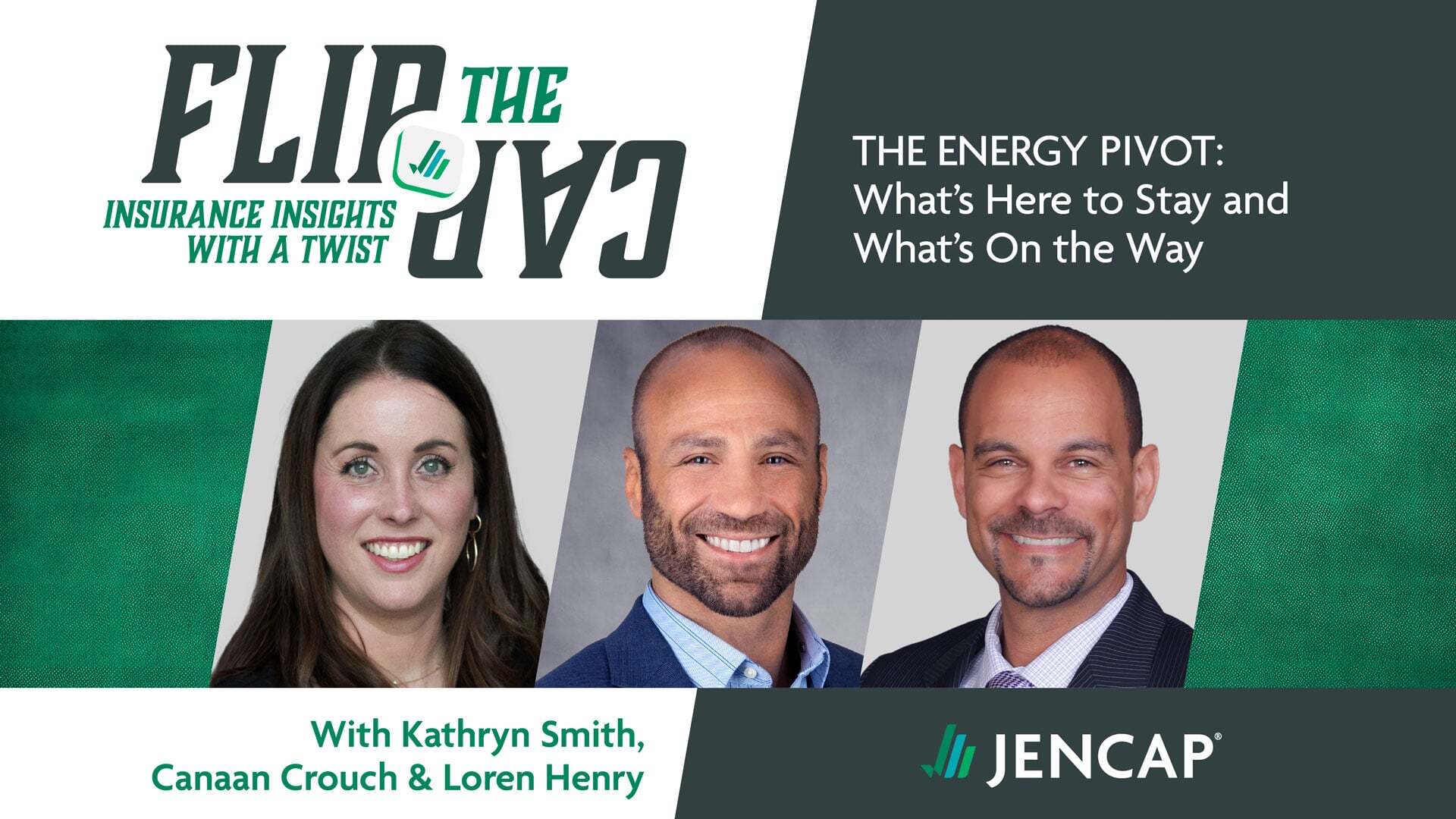
Flip the Cap Episode 20: The Energy Pivot: What’s Here to Stay and What’s On the Way
Aug 27, 2025
Flip the Cap Episode 19: Cannabis Insurance Insights: Regulatory Shifts, Coverage Gaps & Expert Strategies
Jul 31, 2025
Flip the Cap Episode 18: The Big Build: Inside Construction Wrap-Up Programs
Apr 24, 2025
Flip the Cap Episode 17: Flames of Uncertainty: How Wildfires Are Shaping Insurance
Mar 20, 2025
Recent Posts
The Technology Signals Reshaping Transportation Risk in 2026

Apr 25, 2026
Cannabis Insurance in Newly Legalized States

Apr 14, 2026
Renewable Energy Risk Trends for Insurance Agents
Apr 9, 2026
Flip the Cap Episode 22: Jencap 10 Year Anniversary Edition: John Jennings on Growth, Culture, and What’s Next
Apr 7, 2026
Common Gaps in Watercraft & Yacht Insurance Coverage
Mar 26, 2026
PFAS Disposal Rules Shift Again
Mar 19, 2026