
Jul 6, 2023
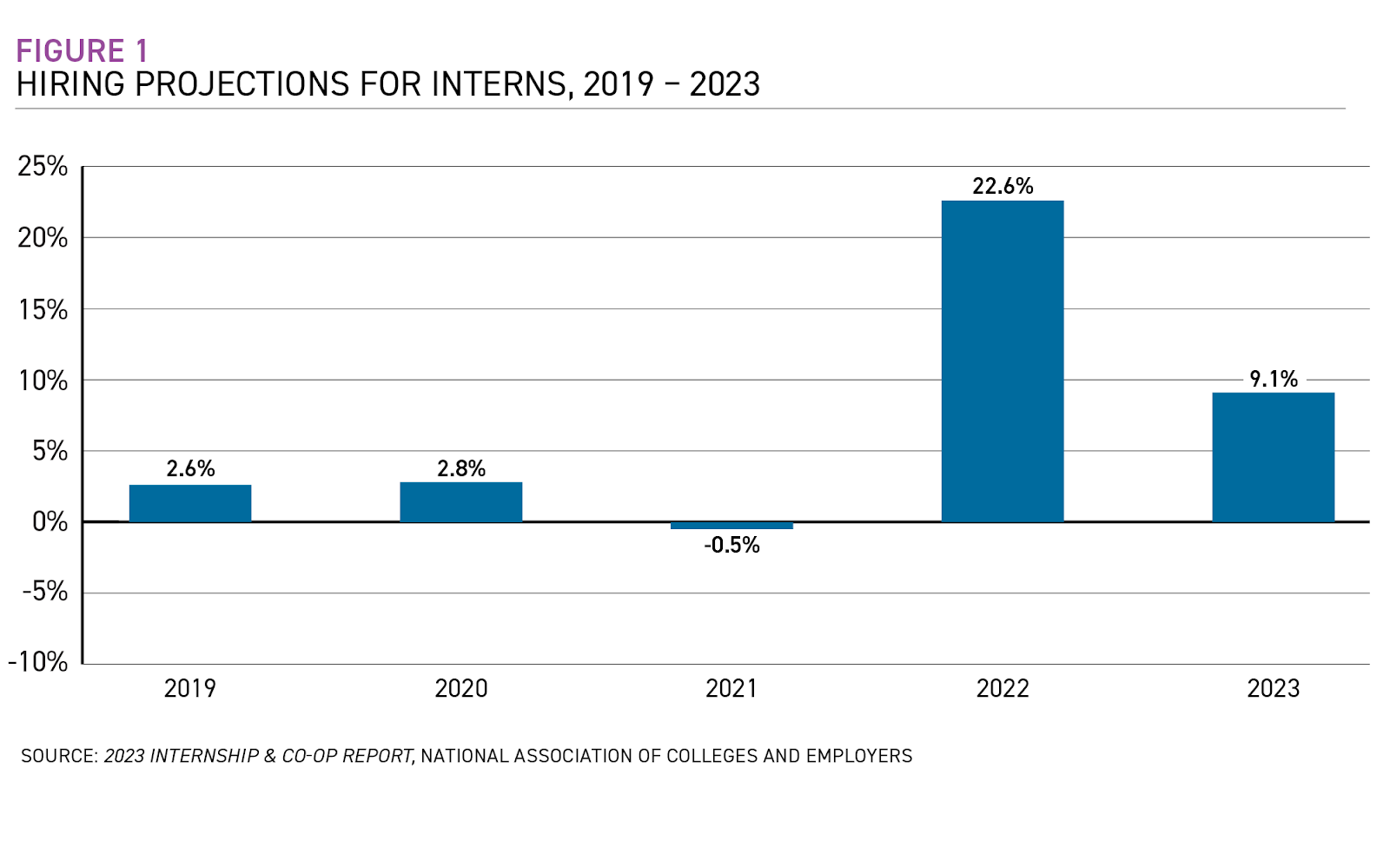
Internships play a crucial role in bridging the gap between academic learning and real-world experience. According to the National Association of Colleges and Employers (NACE), student intern hiring is on the rise, after a COVID pandemic dip. Based on results from their annual internship report, NACE expects employers to increase their intern hiring by 9.1% for the 2023 academic year.
A common question among students and employers alike is whether interns are eligible for workers’ compensation benefits. Unfortunately, there isn’t a one-size-fits-all answer, and it’s best to consult with your insurer if your hiring plans include interns. In this blog post, we’ll cover a few important factors to keep in mind.
Workers’ Compensation: A (Very) Brief Overview
Workers’ compensation insurance is a government-mandated program that provides benefits to employees who become injured or sick on the job or as a result of their job. It provides medical benefits, wage replacement, rehabilitation services, and more to any worker with a covered claim. The mandated benefits of workers’ compensation insurance vary from state to state, so it’s important to partner with a specialist who understands the specific nuances of every class code and state.
Workers’ Compensation for Paid Internships
When an intern is paid for their services, they are legally treated as employees, making them automatically eligible for workers’ compensation. Once hired for the paid internship, they are eligible for workers’ compensation benefits if they sustain a work-related injury or illness on the job.
Need additional clarity on whether an intern should be paid or not? The U.S. Department of Labor provides a list of criteria to help companies make this decision. This includes factors, such as:
- The extent to which the intern and the employer clearly understand that there is no expectation of compensation.
- The extent to which the internship accommodates the intern’s academic commitments by corresponding to the academic calendar.
- The extent to which the internship’s duration is limited to the period in which the internship provides the intern with beneficial learning.
- The extent to which the intern’s work complements, rather than displaces, the work of paid employees while providing significant educational benefits to the intern.
Workers’ Compensation for Unpaid Internships
Because they are not compensated for their time and efforts, unpaid interns may not be considered “employees” in the traditional sense. However, they are still eligible for workers compensation benefits. In these situations, the charge for the intern’s coverage is similar to a charge for volunteers, which is calculated by taking the intern’s estimated working hours and applying an average pay rate.
Misclassifying Intern Employment Status
On a workers compensation policy, every employee must be individually classified based on their job responsibilities. That classification, along with payroll figures, dictates the premium for the policy. Unfortunately, employees often get erroneously misclassified. In the case of interns, companies may misclassify a paid intern as a “casual worker” or “temp worker,” and unpaid interns as “volunteers.”
According to Jeff Sandy, VP of Workers’ Compensation Brokerage for Jencap Insurance Services, “Misclassifications of employees is one of the biggest challenges we see in the Workers’ Compensation space. Most agents mistakenly think that an employee who works in the office most of the time is classified as ‘clerical.’ In reality, the employee should be classed in the highest-rated classification they are working in, regardless of how much time is spent in the office.”
Misclassifying an employee on a workers compensation policy can have several negative ramifications:
- Misclassification can impact the employer’s ability to secure coverage, because the policy premium wouldn’t be high enough to cover the actual risk exposure.
- It can potentially drive down the experience modification factor for the company, if the expected losses are significantly lower than the risk exposure.
- Misclassified interns may be incorrectly denied important benefits and protections, including workers’ compensation coverage, leading to potential legal and financial liabilities for the employer.
Providing a Safe Work Environment to Interns
Employers have a significant role to play in ensuring the safety and well-being of their interns. Regardless of workers’ compensation eligibility, employers should prioritize providing a safe working environment, adequate training, and appropriate supervision to all interns. Implementing effective risk-management strategies and addressing potential hazards can go a long way in preventing workplace injuries and illnesses.
Consulting Insurance Professionals
If you’re considering working with student interns in the near future, it’s crucial to seek guidance from insurance professionals who understand the nuances of workers’ compensation for student interns within your state. There are a number of factors that can impact coverage and rates, and some of that can vary from state to state.
Jencap has a dedicated team of workers’ compensation brokers with industry-leading expertise and over 70+ monoline carrier partners. Contact our team today for a quote.
Interested in keeping up with the latest insurance industry news? Visit our blog for more.

Explore Further

Flip the Cap Episode 15: Workers’ Comp Compass: Expert Advice from Kristi Tinker

Construction Workers’ Compensation Claims Costs on the Rise

Are Student Interns Eligible for Workers’ Compensation Coverage?

Tarheel Insurance Services Rebrands to Jencap Insurance Services Inc.

Top 20 Most Dangerous Jobs in the United States

Don’t Get Railroaded on Your FELA Claim

Is Workplace Violence Covered Under Workers’ Compensation?

How Delaying to Report an Injury Hurts Employee and Employer

Importance of Complete Workers’ Comp Insurance Submissions

Workers’ Compensation Cannabis Class Code Roulette

On the Road: Talking to Your Charter Bus Clients

Jencap Holdings LLC to Acquire Risk Innovations, a Specialty Insurance Business
Trends & White Papers

Agent’s Guide to Professional Liability Gaps (and How to Close Them)
Professional risks are evolving faster than most coverage forms can keep up. The difference between protection and exposure often comes down to the fine print. Do you know how to read between the lines? Jencap’s professional lines specialists do, helping you see what others might miss.
The New Era of Workers' Compensation: Powered by Data, Driven by Outcomes
Cracking the CAT Modeling Code
Is Going Green Good?
Chronicles of Casualty
Navigating the New Frontiers of Professional Lines Insurance
Preparing for The Future of Cannabis Insurance
How Climate Change is Shifting the Insurance Industry
Garage Gurus: Garage Coverage Explained
Riding The Waves of Change Insurance Industry Outlook
Podcasts

Flip the Cap Episode 22: Jencap 10 Year Anniversary Edition: John Jennings on Growth, Culture, and What’s Next

Flip the Cap Episode 21: Global E&S Trends, Emerging Risks and 2026 Predictions

Flip the Cap Episode 20: The Energy Pivot: What’s Here to Stay and What’s On the Way

Flip the Cap Episode 19: Cannabis Insurance Insights: Regulatory Shifts, Coverage Gaps & Expert Strategies

Flip the Cap Episode 18: The Big Build: Inside Construction Wrap-Up Programs

Flip the Cap Episode 17: Flames of Uncertainty: How Wildfires Are Shaping Insurance
Recent Posts

The Technology Signals Reshaping Transportation Risk in 2026

Cannabis Insurance in Newly Legalized States

Renewable Energy Risk Trends for Insurance Agents
Flip the Cap Episode 22: Jencap 10 Year Anniversary Edition: John Jennings on Growth, Culture, and What’s Next

Common Gaps in Watercraft & Yacht Insurance Coverage

PFAS Disposal Rules Shift Again