What defines a navigable waterway? The answer depends on who you ask and which court decides. The legal definition of navigable waters is a shifting target, subject to changing interpretations, that can have significant consequences for industries operating near or on waterways. Baltimore Gas & Electric Co. v. Coastline Commercial Contracting, Inc. is the latest case to expose the tensions between state and federal jurisdiction, leaving businesses and insurers watching closely.
The Maritime Tort Case That’s Making Waves
In 2019, a 13,000-volt electric cable belonging to Baltimore Gas & Electric (BG&E) was damaged at the bottom of Eli Cove, a small inlet in Maryland. BG&E alleged that a barge operated by Coastline Commercial Contracting was responsible and sued for negligence, claiming that the case fell under federal admiralty jurisdiction.
Initially, the district court disagreed, dismissing the case on the grounds that Eli Cove did not meet the legal threshold for navigable waters — meaning it wasn’t significant for commercial navigation. However, the Fourth Circuit Court of Appeals reversed this decision, asserting that the lower court had applied the wrong standard. The appellate ruling determined that the incident could indeed impact maritime commerce, bringing the case back under federal admiralty jurisdiction.
Why It Matters for Insurance Professionals
Cases like this highlight the ongoing legal and regulatory uncertainty surrounding maritime risks. For businesses operating on or near water, liability exposure can depend on how courts interpret what is and what isn’t a navigable waterway. This shifting definition also affects insurance coverage requirements, such as the U.S. Longshore and Harbor Workers’ Compensation Act (USL&H). Many businesses like dock builders, bridge builders, marine contractors, freight handlers, and vendors delivering to ships may assume a standard Workers’ Compensation policy covers them. But if a claim falls under federal jurisdiction, the lack of USL&H coverage could leave them entirely uninsured. You have an opportunity to shed some light on risks for your clients.
Jencap: Your Expert in Maritime Risks
When water is part of the equation, coverage gaps can be costly — don’t let your clients get swept away by shifting legal definitions. Our experts, including Certified Marine Insurance Professionals (CMIP), specialize in identifying exposures and guiding agents through the complexities of maritime jurisdiction, USL&H coverage, and beyond. When in doubt, reach out. Contact Jencap today to learn how we can help you and your clients navigate these high-risk waters.
The Jencap Workers' Compensation Insurance Team
Workers’ compensation is not a generalist’s game. Jencap’s dedicated division of industry-leading workers’ compensation experts understands every facet of this complex coverage line — from multi-state operations and high-hazard risks to United States Longshore and Harbor Workers Compensation Act (USL&H), and everything in between. No matter your clients’ industry, state, experience modification factor, premium size, or class code, the Jencap workers' compensation team has you covered.
Explore Further
Why Accurate Workers’ Compensation Audits Matter More Than Ever

Dec 18, 2025
When Coverage Isn’t Enough: How to Find the Right Workers’ Compensation Carrier

Aug 14, 2025
State of the Workers’ Comp Market: Insights for Agents

Jul 10, 2025
Employer Responsibilities: How to Maintain Workplace Safety and Avoid Workers’ Comp Claims

May 15, 2025
How to Calculate Workers’ Compensation: What You Should Know
May 8, 2025
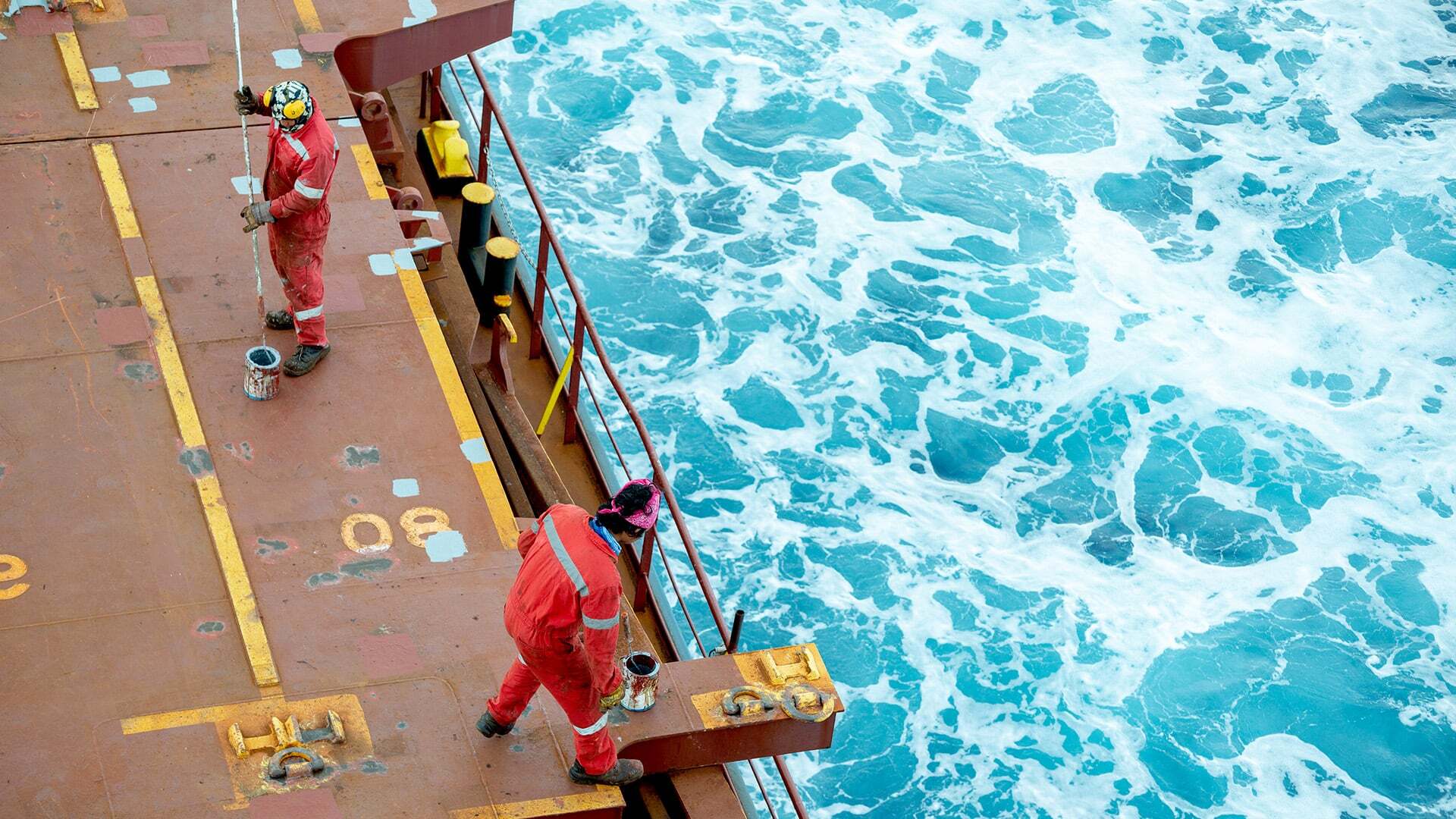
The Shifting Boundaries of Navigable Waters

Feb 20, 2025
Top 4 Workers’ Compensation Exposures for Restaurant Owners

Jan 2, 2025
Maximizing Opportunities in a Profitable Workers’ Comp Insurance Market

Oct 17, 2024
Inflation’s Impact on Workers’ Comp: Managing Medical Market Shifts
Aug 1, 2024
Understanding NCCI’s Changes to the Workers’ Comp E-Mod Factor Methodology

Feb 8, 2024
Workers’ Compensation Market Continues to Drop Rates

Feb 1, 2024
Jencap Experts’ 2024 Top Insurance Trends
Jan 25, 2024
Trends & White Papers
Agent’s Guide to Professional Liability Gaps (and How to Close Them)
Professional risks are evolving faster than most coverage forms can keep up. The difference between protection and exposure often comes down to the fine print. Do you know how to read between the lines? Jencap’s professional lines specialists do, helping you see what others might miss.
The New Era of Workers' Compensation: Powered by Data, Driven by Outcomes
Cracking the CAT Modeling Code
Is Going Green Good?
Chronicles of Casualty
Navigating the New Frontiers of Professional Lines Insurance
Preparing for The Future of Cannabis Insurance
How Climate Change is Shifting the Insurance Industry
Garage Gurus: Garage Coverage Explained
Riding The Waves of Change Insurance Industry Outlook
Podcasts
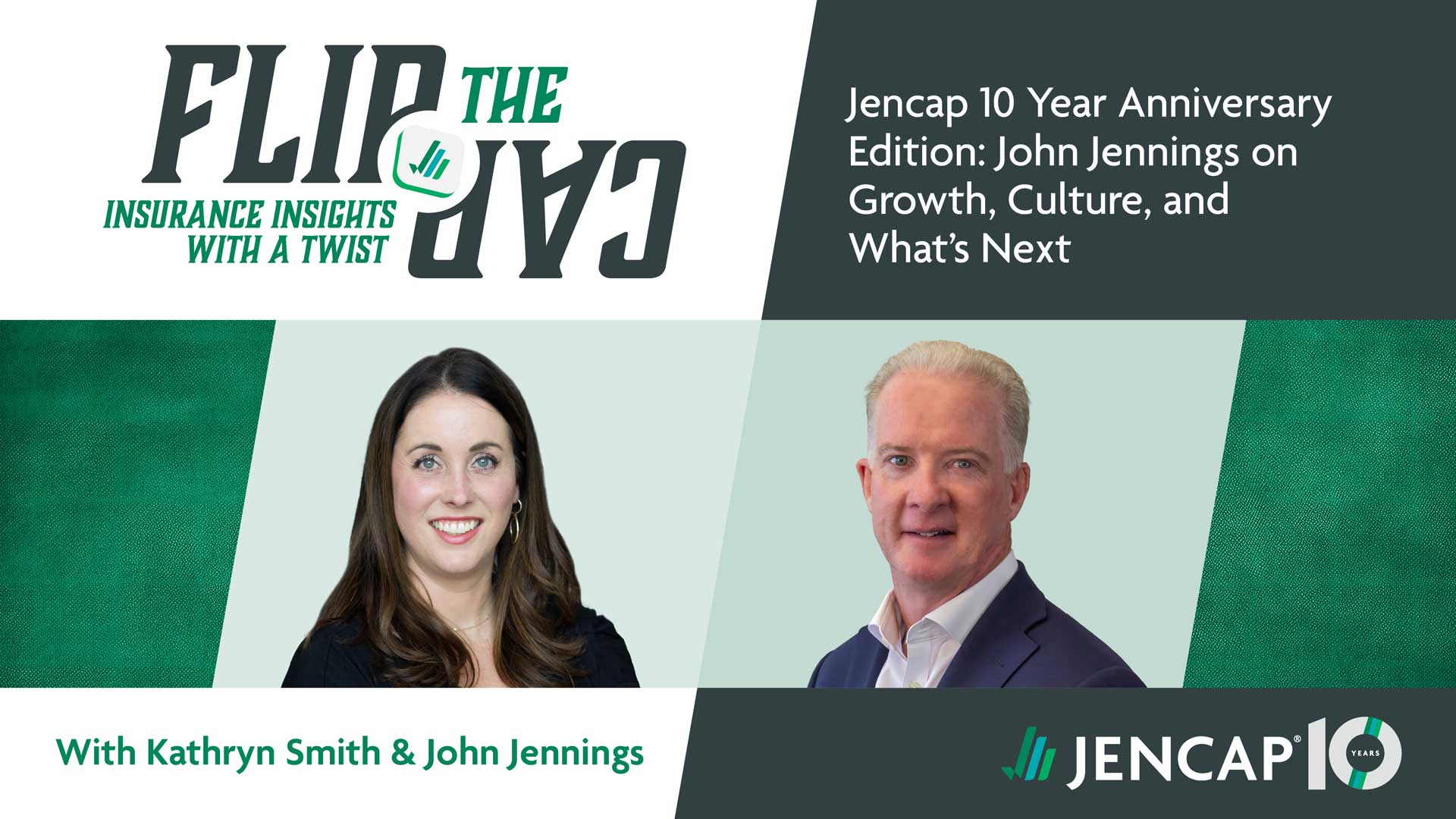
Flip the Cap Episode 22: Jencap 10 Year Anniversary Edition: John Jennings on Growth, Culture, and What’s Next
Apr 7, 2026
Flip the Cap Episode 21: Global E&S Trends, Emerging Risks and 2026 Predictions
Nov 12, 2025
Flip the Cap Episode 20: The Energy Pivot: What’s Here to Stay and What’s On the Way
Aug 27, 2025
Flip the Cap Episode 19: Cannabis Insurance Insights: Regulatory Shifts, Coverage Gaps & Expert Strategies
Jul 31, 2025
Flip the Cap Episode 18: The Big Build: Inside Construction Wrap-Up Programs
Apr 24, 2025
Flip the Cap Episode 17: Flames of Uncertainty: How Wildfires Are Shaping Insurance
Mar 20, 2025
Recent Posts
The Technology Signals Reshaping Transportation Risk in 2026
Apr 25, 2026
Cannabis Insurance in Newly Legalized States

Apr 14, 2026
Renewable Energy Risk Trends for Insurance Agents
Apr 9, 2026
Flip the Cap Episode 22: Jencap 10 Year Anniversary Edition: John Jennings on Growth, Culture, and What’s Next
Apr 7, 2026
Common Gaps in Watercraft & Yacht Insurance Coverage
Mar 26, 2026
PFAS Disposal Rules Shift Again
Mar 19, 2026