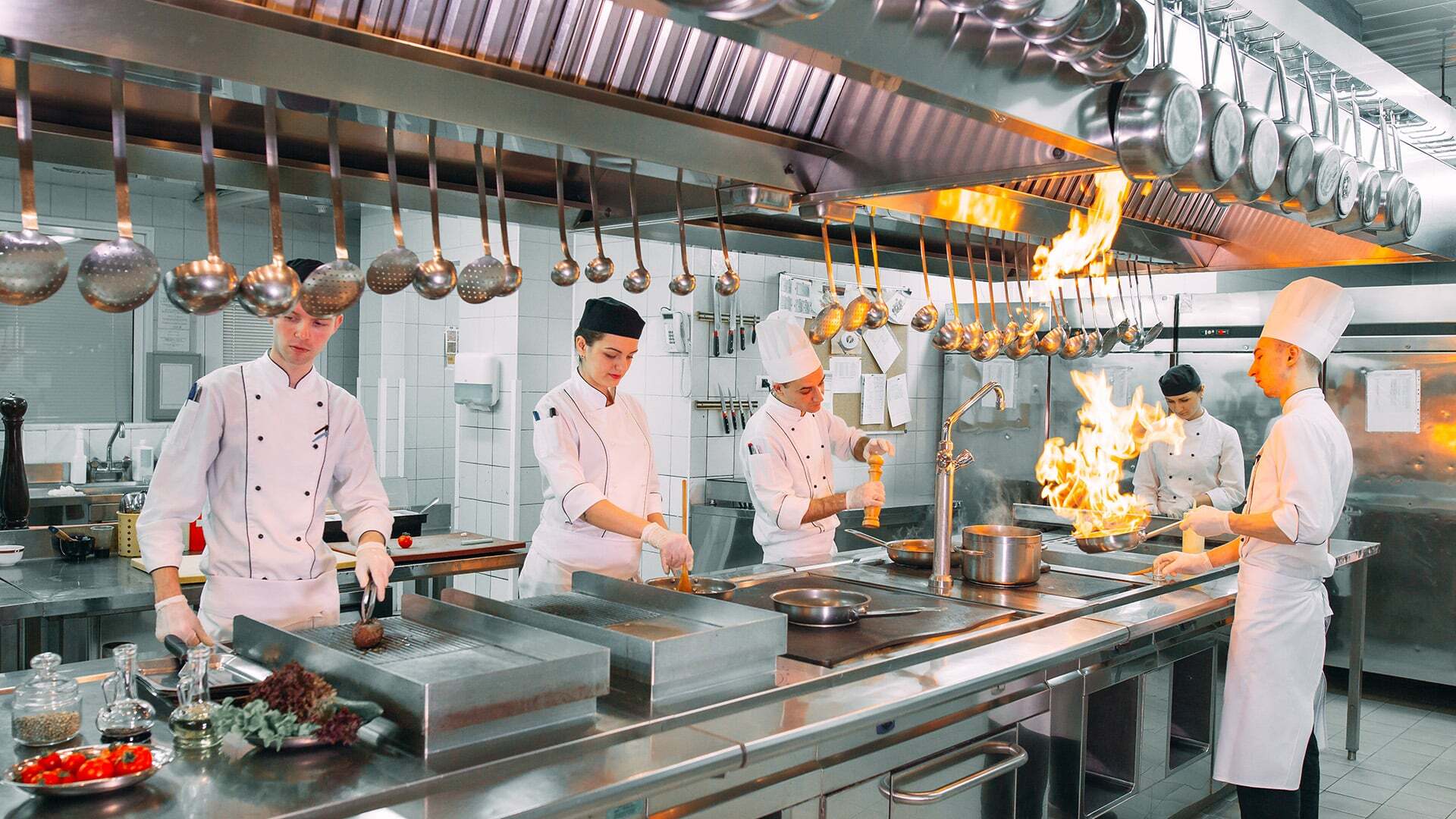
From juggling tight margins to creating a memorable customer experience, restaurant owners are no strangers to challenges. But lurking behind the scenes of every bustling kitchen and buzzing dining room is a risk that often goes unnoticed — employee injuries. According to the 2024 AmTrust Restaurant Risk Report, the restaurant industry faces a significant burden from workers’ compensation claims. Understanding these risks is the first step toward helping your clients protect their employees and their bottom line.
Breaking Down the Risks: Most Common Workers’ Comp Claims in Restaurants
The AmTrust report, which analyzed nearly 130,000 workers’ comp claims from 2018 to 2023, highlights the top injury trends that restaurant owners need to watch out for:
- Cuts, Punctures, and Scrapes
The most common injury type. These incidents often involve kitchen tools, broken glass, or other sharp objects. While frequent, they are relatively inexpensive to treat, with an average claim of $1,798. - Burns and Scalds
Hot surfaces, boiling liquids, and frying oil are hazards that make burns the second-most-common injury. These claims cost an average of $4,326 per incident. - Muscle Strains and Sprains
Whether from slipping on a wet floor or moving heavy supplies, these injuries, though less frequent, cost significantly more — $9,966 to $10,672 per claim. - Back Injuries
While not as common, back injuries such as disc, vertebrae, and spinal cord damage are by far the most expensive, costing restaurant employers $60,000 to $85,000 per claim. The physical demands of food-service work — heavy lifting, repetitive motions, and bending — have contributed to an increase in these types of injuries in recent years.
The Hidden Cost of Workers’ Comp Claims
The financial impact of workers’ comp claims extends far beyond the direct cost of medical treatment and wage replacement. Rising claim expenses can increase insurance premiums, eat into profit margins, and affect employee morale. For small and mid-sized restaurants, a single high-cost injury, like a back injury, can be financially devastating.
But the hidden costs don’t stop there. According to the Occupational Safety and Health Administration (OSHA), indirect costs associated with workplace injuries can be one to twenty times greater than direct costs, depending on the total costs of the injury. These hidden costs include:
- Lost Productivity: Injured employees may require weeks or months to recover, leaving shifts understaffed or forcing the employer to pay for temporary labor. In high-turnover industries like restaurants, this disruption can lead to slower service, longer wait times, and dissatisfied customers.
- Employee Turnover: When workers feel unsafe or overburdened, they are more likely to leave their jobs. Though turnover rates have returned to pre-pandemic levels, it’s still an issue within the industry, and workplace injuries only exacerbate it.
- Reputational Damage: A restaurant’s reputation can suffer if news of a preventable injury goes public. Customers may question the establishment’s commitment to safety and employee well-being, potentially leading to decreased business.
- Legal Costs: Severe injuries can sometimes result in lawsuits, especially if the employee believes negligence contributed to the incident. Legal fees and settlements can be crippling for small businesses.
- Training Costs: If an injured employee cannot return to work, new hires must be trained. Training costs can add up quickly, especially during busy periods when time and resources are stretched thin.
These ripple effects highlight why proactive loss control and workplace safety measures, along with the right workers’ compensation insurance carrier partner, are essential for small business restaurants.
Jencap: Your Workers’ Compensation Partner
Navigating the complexities of restaurant insurance coverage requires an experienced partner. That’s where Jencap steps in. With a deep understanding of the restaurant industry and a proven track record in workers’ comp, Jencap offers comprehensive insurance solutions that help restaurant owners mitigate risks and safeguard their operations.
Ready to take the next step? Contact Jencap today to learn more about workers’ comp coverage tailored to the restaurant industry.
The Jencap Workers' Compensation Insurance Team
Workers’ compensation is not a generalist’s game. Jencap’s dedicated division of industry-leading workers’ compensation experts understands every facet of this complex coverage line — from multi-state operations and high-hazard risks to United States Longshore and Harbor Workers Compensation Act (USL&H), and everything in between. No matter your clients’ industry, state, experience modification factor, premium size, or class code, the Jencap workers' compensation team has you covered.
Explore Further
Why Accurate Workers’ Compensation Audits Matter More Than Ever

Dec 18, 2025
When Coverage Isn’t Enough: How to Find the Right Workers’ Compensation Carrier

Aug 14, 2025
State of the Workers’ Comp Market: Insights for Agents

Jul 10, 2025
Employer Responsibilities: How to Maintain Workplace Safety and Avoid Workers’ Comp Claims

May 15, 2025
How to Calculate Workers’ Compensation: What You Should Know

May 8, 2025
The Shifting Boundaries of Navigable Waters
Feb 20, 2025
Top 4 Workers’ Compensation Exposures for Restaurant Owners

Jan 2, 2025
Maximizing Opportunities in a Profitable Workers’ Comp Insurance Market

Oct 17, 2024
Inflation’s Impact on Workers’ Comp: Managing Medical Market Shifts
Aug 1, 2024
Understanding NCCI’s Changes to the Workers’ Comp E-Mod Factor Methodology

Feb 8, 2024
Workers’ Compensation Market Continues to Drop Rates

Feb 1, 2024
Jencap Experts’ 2024 Top Insurance Trends
Jan 25, 2024
Trends & White Papers
Agent’s Guide to Professional Liability Gaps (and How to Close Them)
Professional risks are evolving faster than most coverage forms can keep up. The difference between protection and exposure often comes down to the fine print. Do you know how to read between the lines? Jencap’s professional lines specialists do, helping you see what others might miss.
The New Era of Workers' Compensation: Powered by Data, Driven by Outcomes
Cracking the CAT Modeling Code
Is Going Green Good?
Chronicles of Casualty
Navigating the New Frontiers of Professional Lines Insurance
Preparing for The Future of Cannabis Insurance
How Climate Change is Shifting the Insurance Industry
Garage Gurus: Garage Coverage Explained
Riding The Waves of Change Insurance Industry Outlook
Podcasts

Flip the Cap Episode 22: Jencap 10 Year Anniversary Edition: John Jennings on Growth, Culture, and What’s Next

Apr 7, 2026
Flip the Cap Episode 21: Global E&S Trends, Emerging Risks and 2026 Predictions

Nov 12, 2025
Flip the Cap Episode 20: The Energy Pivot: What’s Here to Stay and What’s On the Way

Aug 27, 2025
Flip the Cap Episode 19: Cannabis Insurance Insights: Regulatory Shifts, Coverage Gaps & Expert Strategies

Jul 31, 2025
Flip the Cap Episode 18: The Big Build: Inside Construction Wrap-Up Programs

Apr 24, 2025
Flip the Cap Episode 17: Flames of Uncertainty: How Wildfires Are Shaping Insurance
Mar 20, 2025
Recent Posts
The Technology Signals Reshaping Transportation Risk in 2026

Apr 25, 2026
Cannabis Insurance in Newly Legalized States

Apr 14, 2026
Renewable Energy Risk Trends for Insurance Agents
Apr 9, 2026
Flip the Cap Episode 22: Jencap 10 Year Anniversary Edition: John Jennings on Growth, Culture, and What’s Next

Apr 7, 2026
Common Gaps in Watercraft & Yacht Insurance Coverage
Mar 26, 2026
PFAS Disposal Rules Shift Again
Mar 19, 2026